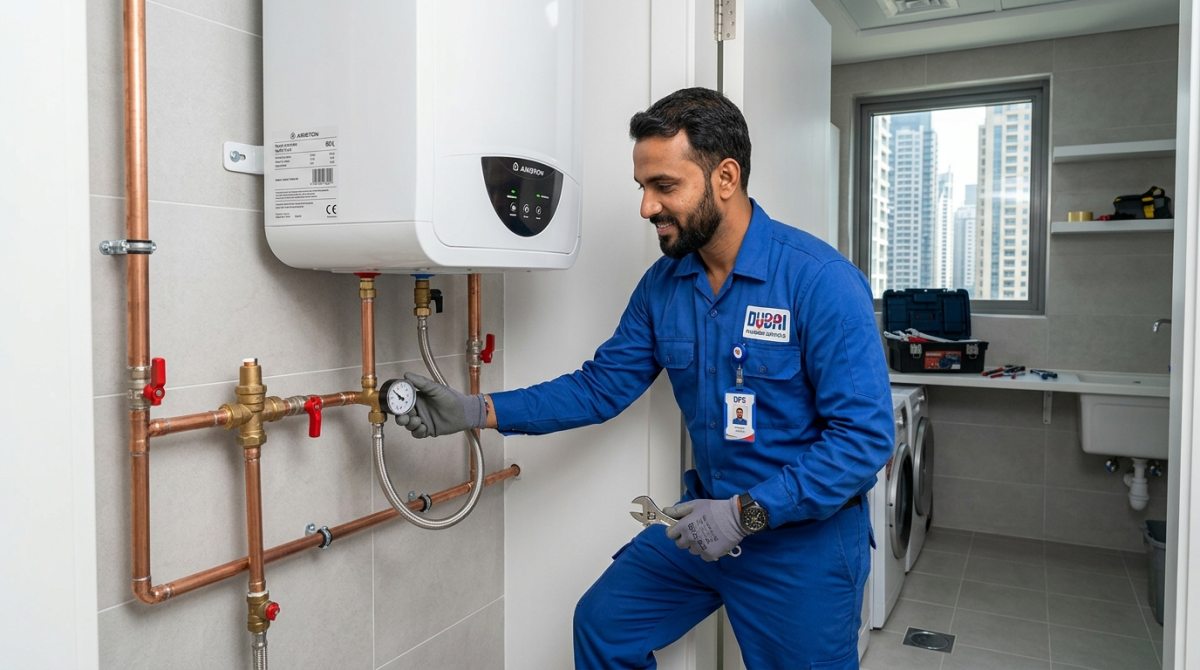
Water heaters in Dubai can develop catastrophic burst hazards if their Temperature & Pressure Relief (T&P) safety valve is stuck, calcified, or intentionally plugged, combined with a thermostat failure that causes water to boil uncontrollably into superheated steam. Dubai building codes mandate that all domestic water heaters feature a working T&P valve vented to a drain, an independent thermal safety cut-off switch, and an operational magnesium sacrificial anode rod. Inspecting the safety valve lever every 6 months prevents dangerous pressure build-up and ceiling collapse.
In the vast majority of Dubai apartments and villas, domestic water heaters are concealed above bathroom or hallway false ceilings directly overhead.
While modern water heaters are engineered with multiple fail-safe mechanisms, mineral scaling from hard water and lack of routine maintenance can compromise these safety systems, leading to severe ceiling flooding, structural collapse, or catastrophic steam pressure releases.
Critical Water Heater Safety Components & Functions
Every domestic water heater installed in the UAE relies on five core safety mechanisms:
| Safety Component | Critical Function | Failure Consequence | Recommended Service Interval |
|---|---|---|---|
| Temperature & Pressure Relief (T&P) Valve | Opens automatically at 7–8 bar or 90°C to release steam | Catastrophic tank rupture or explosive ceiling collapse | Test manual lever every 6 months |
| Dual Thermostat & Thermal Cut-Out | Cuts electrical power at 85°C if primary thermostat fails | Continuous boiling, heating element burnout, steam generation | Annual electrical multimeter check |
| Magnesium Sacrificial Anode | Attracts mineral corrosion to protect the steel tank cylinder | Premature tank wall perforation and sudden ceiling flooding | Inspect and replace every 2–3 years |
| Non-Return Check Valve (NRV) | Prevents hot water from backing up into cold water supply line | Thermal expansion damage to domestic plastic pipe joints | Test during annual plumbing service |
| 30mA Earth Leakage Breaker (ELCB) | Instantly trips power if water contacts the live heating element | Severe electrical shock hazard through taps or shower heads | Monthly test button verification on DB |
Warning Signs Your Water Heater is Under Dangerous Pressure
Homeowners and tenants in Dubai should immediately turn off the dedicated water heater wall switch and isolate the cold water supply if they observe any of the following symptoms:
- Constant boiling, banging, or rumbling sounds coming from the false ceiling cavity.
- Steam or sputtering boiling water spitting from bathroom taps when turned to the cold setting.
- Continuous water dripping or hissing from the safety discharge pipe above the ceiling.
- Rust-stained water dripping through ceiling access panels or plasterboard joints.
- Water that is scalding hot to the touch even when the thermostat is adjusted to a medium setting.
Dubai Municipality & DEWA Installation Standards
All water heater replacements in Dubai must comply with municipal plumbing and electrical codes. Tanks installed in false ceilings must be supported by heavy-duty M10/M12 unistrut steel drop rods anchored into reinforced concrete slabs, never hung from lightweight ceiling furring channels.
Water Heater Safety Dubai: Field Findings for Dubai Properties
Continuously Running Toilet Cistern & High Utility Bills
What we find: Toilet cistern hissing continuously or water trickling down the ceramic bowl, causing hundreds of dirhams in excess DEWA charges. Mineral scale encrustation on the silicone flush flapper seal, ruptured fill valve diaphragm, or misaligned float arm.
How we fix it: Dismantle internal cistern mechanism; de-scale the valve body; replace worn seals or install a modern water-saving dual-flush mechanism (Geberit / Grohe compatible); and perform dye leak tests to confirm 100% positive water shutoff. (instrumentation: Valve adjustment tools, OEM Geberit/Grohe replacement seals, water pressure gauge.; typical turnaround 30–45 Minutes; 90-Day Leak-Free Guarantee).
Accumulated Household Snags & Broken Fixtures
What we find: Loose door handles, sagging wardrobe doors, unmounted heavy mirrors/curtain poles, and leaking under-sink waste traps. Improper fixings into hollow gypsum drywall, stripped hinge screw threads, or degraded rubber trap gaskets.
How we fix it: Dispatch an all-trade handyman van equipped with professional Fischer drywall toggles, wood grain repair dowels, sanitary waste trap kits, and laser alignment tools to systematically resolve a 10-point repair checklist in a single visit. (instrumentation: Comprehensive multi-trade tool kit, cross-line laser level, Fischer heavy-duty anchors, sanitary silicone tools.; typical turnaround 1–2 Hours; 30-Day Workmanship Guarantee).
Plan the job: related Dubai guides
Compare the water heater safety dubai guidance above with our local service and area pages:
- General Maintenance in Dubai — full scope, pricing and response times
- Water Tank Cleaning & Dubai Municipality Guidelines (2026)
- Swimming Pool Maintenance & Pump Repair in Dubai (2026 Guide)
- Technical services in Dubai Marina
- Technical services in Downtown Dubai
Scope varies by unit type, access and condition. Send photos and get a fixed, itemised General Maintenance quotation — free, no obligation.
Frequently asked questions
Why is water constantly dripping from my water heater safety valve in Dubai? +
Slight dripping during heating cycles is normal thermal expansion. However, continuous heavy dripping indicates either excessive Dubai municipal water supply pressure (requiring a pressure reducing valve), a failing T&P valve seat, or a malfunctioning thermostat overheating the water.
How often should I test the water heater relief valve lever? +
You should gently lift the manual test lever on your safety valve once every 6 months. Water should rush freely into the drain pipe. If the lever is seized solid or no water flows, replace the valve immediately.
What is the safest temperature setting for a water heater in the UAE? +
We recommend setting the thermostat to 60°C (140°F). This temperature is hot enough to prevent the growth of harmful Legionella bacteria in the tank while preventing severe scalding risks and reducing mineral limescale buildup.
Share it with property owners, tenants, or building management in Dubai.
Our Technical Services in Dubai
Qualified technical services for residential and commercial properties across Dubai. One call covers all trades.