If your Dubai apartment uses district cooling (Empower, Emicool, or Tabreed) and the AC is blowing room-temperature or warm air, the issue in over 85% of cases is inside your apartment's Fan Coil Unit (FCU), not the central building plant. The most common culprit is a failed 2-way motorized actuator valve (such as Belimo, Danfoss, or Honeywell) that has mechanically seized or suffered a burnt 24V/220V synchronous motor, preventing chilled water from entering the cooling coil. Other frequent causes include clogged Y-strainers filled with pipe magnetite scale, trapped air pockets in the coil header, or an uncalibrated digital thermostat.

District Cooling Basics: Understanding Your Apartment's FCU
Living in residential towers across Dubai Marina, Jumeirah Lake Towers (JLT), Business Bay, and Downtown Dubai means your air conditioning is powered by District Cooling (Empower, Emicool, or Tabreed). Instead of an outdoor compressor unit on your balcony, your apartment is equipped with concealed ceiling Fan Coil Units (FCUs) connected to high-pressure central chilled water risers.
When you set your thermostat to 20°C and feel warm air blowing from the vents, many residents assume the building's central chiller is broken. However, in more than 85% of cases, the chilled water supply in the riser is at a crisp 6°C, but internal component failures inside your ceiling FCU prevent heat exchange.
The #1 Culprit: Seized Belimo or Danfoss Actuator Valves
The motorized 2-way or 3-way actuator valve is the gatekeeper of your cooling. When the room temperature rises above your setpoint, the thermostat sends an electrical signal to the actuator motor, which rotates a brass valve stem to let freezing chilled water flow through the cooling coil.
Because these valves cycle open and closed thousands of times every month, plastic gears strip, synchronous motors burn out, or mineral scale locks the valve spindle in the closed position. The fan continues blowing air across a room-temperature dry coil, circulating warm air throughout your rooms.
Diagnostic Checklist for Chiller FCU Cooling Failures
- Touch the Chilled Water Supply & Return Pipes: Remove the ceiling access hatch. If both the inlet and outlet insulated copper pipes are warm to the touch, chilled water is not flowing through the unit (actuator closed or strainer blocked). If the inlet is icy cold with condensation but the outlet is warm, the actuator is functioning but water flow is severely restricted.
- Inspect the Actuator Valve Position Indicator: Belimo and Danfoss actuators have a mechanical manual lever or yellow position indicator showing "0" (Closed) or "1" (Open). If the thermostat calls for cooling but the lever stays at "0", the actuator motor has failed.
- Bleed the Chilled Water Coil: Air pockets trapped in high-elevation ceiling FCUs create vapor locks that completely halt water circulation. Depressing the brass air vent needle releases trapped air until a solid stream of water emerges.
- Clean the Brass Y-Strainer: High-rise chilled water pipes accumulate black iron oxide magnetite. Unscrewing the strainer plug and scrubbing the stainless steel mesh restores full volumetric water flow.
- Test Thermostat Output Voltage: Using a calibrated digital multimeter, our technicians confirm whether the thermostat is outputting the required 24VAC or 220VAC command signal to terminal "Y1".
District Cooling Responsibility: Landlord vs Provider
Understanding where provider responsibility ends and personal maintenance begins prevents frustrating delays:
- Empower / Emicool / Tabreed: Responsible strictly up to the building bulk heat exchanger (Plate Heat Exchanger) and primary BTU meters.
- Building FM / Facilities Management: Responsible for vertical building chilled water risers, booster pumps, and common corridor FCUs.
- Apartment Owner / Tenant: 100% responsible for in-unit FCU blower motors, capacitor fans, actuator valves, Y-strainers, digital thermostats, and return air filters.
For fast, specialized district cooling diagnostics, visit our dedicated Chiller AC Repair Dubai hub or review our troubleshooting guide for AC Blowing Warm Air in Dubai.
For verified technical support regarding chiller ac not cooling dubai, our Dubai certified technicians deliver rapid response inspections with itemized written scopes.
Engineering Root-Cause Analysis: Dubai Environmental & Operational Factors
Operating air conditioning and district cooling infrastructure in the United Arab Emirates presents severe engineering challenges that rarely exist in moderate climates. Ambient outdoor temperatures in Dubai regularly surpass 48°C during peak summer months (June through September), creating condenser head pressures exceeding 380 PSI in standard R410A refrigeration circuits. Concurrently, coastal atmospheric humidity frequently rises above 90% across prime residential districts like Dubai Marina, Jumeirah Beach Residence (JBR), and Palm Jumeirah.
When humid ambient air is drawn across an indoor Fan Coil Unit (FCU) or evaporator coil operating with reduced airflow—typically caused by fine desert silica dust accumulation—the temperature of the evaporator drops below the dew point. This causes excessive moisture condensation, rapidly overwhelming shallow primary drain trays and causing ceiling water stains, dripping supply diffusers, or mold growth behind gypsum bulkheads.
Furthermore, in high-rise towers served by centralized district cooling providers (such as Empower, Tabreed, or Emicool), system efficiency hinges on the temperature delta (ΔT) between the chilled water supply (typically 5.5°C to 7.0°C) and the return water (targeted at 13.0°C to 15.0°C). When 2-way motorized modulating actuator valves (Belimo, Danfoss, or Honeywell) seize due to mineral scaling or internal gear wear, the chilled water bypasses heat exchange, leading to warm indoor air and inflated district cooling consumption charges.
Standard Operating Procedure (SOP): 4-Stage HVAC Diagnostic & Servicing Protocol
To ensure long-term cooling efficiency and prevent catastrophic compressor burnouts, certified HVAC technicians execute a disciplined 4-stage engineering protocol:
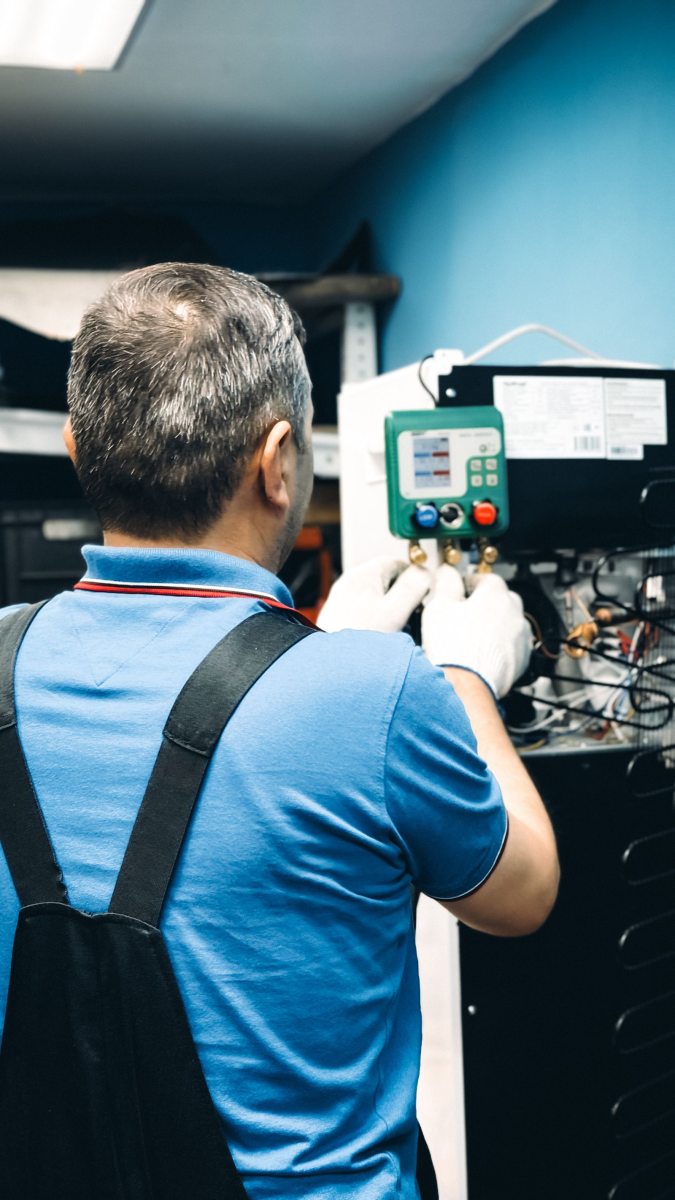
- Stage 1: Thermal & Digital Diagnostic Audit: Technicians inspect the unit using FLIR calibrated infrared thermal cameras to scan supply and return air diffusers, measuring temperature delta-T across the coil. Digital manifold gauges verify suction and liquid line operating pressures against factory superheat and subcooling specifications. Electrical multi-meters verify compressor running amperage (RLA) and dual-run capacitor capacitance (μF).
- Stage 2: Safe Isolation & Containment: The indoor and outdoor electrical supply is isolated via dedicated local rotary isolator switches and Lockout-Tagout (LOTO) protocols compliant with DEWA wiring regulations. For ducted split systems undergoing refrigerant repair, recovery cylinders vacuum out the charge to prevent atmospheric venting.
- Stage 3: Deep Chemical Coil Wash & Drain Jet Flushing: Technicians apply non-acidic alkaline foaming coil cleaner to dissolve hardened dirt, grease, and fungal spores lodged deep within aluminum fins. Condensate drain lines are cleared using pressurized nitrogen blasts and wet-vacuum extraction to eliminate algae blockages. Mandatory secondary drain pan float switches are inspected to guarantee automatic unit shutdown before overflow can occur.
- Stage 4: Commissioning & Airflow Balancing: The system is re-energized, blower motor bearings are lubricated, and thermostat calibration is verified. Technicians ensure the unit achieves a healthy 8°C to 12°C temperature drop across the coil before issuing a digital inspection sign-off.
2026 Transparent Cost Benchmark Guide for AC & Chiller Services in Dubai
To protect property owners, landlords, and tenants against arbitrary pricing, the table below reflects verified 2026 market benchmarks for professional HVAC repairs in Dubai:
| Service Description | Scope of Work Included | Average Market Rate (AED) | Warranty Guarantee |
|---|---|---|---|
| AC Diagnostic & Comprehensive Audit | Thermal delta-T check, gas pressure, electrical components, drain pan | AED 120 – 180 (Waived upon repair) | 30 Days |
| Chemical Coil Wash & Drain Flushing | Alkaline foam cleaning, blower wheel wash, drain line nitrogen clearing | AED 150 – 250 / unit | 90 Days |
| Chiller FCU Actuator Valve Replacement | Supply & installation of genuine Belimo or Danfoss 2-way modulating valve | AED 420 – 680 | 6 Months |
| Dual-Run Capacitor Replacement | Supply & install OEM heavy-duty run capacitor (45/5 μF or 55/5 μF) | AED 180 – 280 | 90 Days |
| R410A / R32 Refrigerant Leak Repair & Top-Up | Nitrogen pressure leak detection, copper brazing, vacuuming & gas charging | AED 250 – 550 | 90 Days |
| Secondary Drain Float Switch Retrofit | Concordia & master-developer compliant automated water safety switch | AED 250 – 380 | 1 Year |
| Villa Annual AC Maintenance Contract (AMC) | 3–4 comprehensive services/year, unlimited 24/7 breakdown callouts | AED 2,200 – 4,800 / year | Full Annual Coverage |
Dubai Regulatory & Community Compliance: Permits, Gate Passes & Working Hours
Carrying out HVAC maintenance in Dubai requires strict compliance with local developer regulations and building management security frameworks. Licensed contractors must manage the following requirements:
- Master Developer Work Permits: In master-planned developments managed by Emaar (Downtown, Dubai Hills, Arabian Ranches), Nakheel (Palm Jumeirah, JVC), or DMCC (JLT), contractors must submit commercial trade licenses, third-party liability insurance, and technician Emirates IDs through online portals (Emaar One, Nakheel NCM, Concordia) to obtain electronic gate security passes.
- Standard Community Noise & Working Hours: Non-emergency maintenance inside residential towers and villa communities is restricted to Monday through Saturday between 8:00 AM and 6:00 PM. High-noise works (such as drilling or duct cutting) are prohibited during weekends and official holidays.
- 24/7 Emergency Access Protocols: For critical breakdowns—such as complete cooling loss during summer heat, water cascading through false ceilings, or short-circuit electrical hazards—Technical Services Dubai maintains pre-approved emergency response clearance with major security gatehouses across 79 Dubai communities.
Preventative Maintenance Schedule for Dubai Residents
Proactive maintenance extends AC equipment lifespan by 5 to 8 years and lowers monthly DEWA electricity bills by up to 25%. Follow this seasonal maintenance roadmap:
- Spring Prep (March – April): Perform comprehensive chemical coil foaming, clear condensate drain lines with nitrogen, test capacitor microfarads, and inspect outdoor condenser fan motors before high temperatures arrive.
- Peak Summer Vigilance (May – September): Clean indoor air filters every 2 to 3 weeks to prevent silica dust starvation. Maintain indoor thermostat setpoints between 23°C and 25°C to avoid continuous compressor overload.
- Autumn Deep Sanitization (October – November): Inspect ductwork for mold and organic microbial growth. Perform NADCA-compliant rotary brush sanitization if stale odors or respiratory allergies appear.
- Winter Tune-Up (December – February): Check motorized bypass valves, calibrate digital thermostats, and inspect electrical distribution terminals for loose connections caused by thermal expansion.
Scope varies by unit type, access and condition. Send photos and get a fixed, itemised AC Services quotation - free, no obligation.
Frequently asked questions
Who is responsible for fixing a warm chiller AC in my apartment? +
District cooling providers (Empower, Emicool) are only responsible for supplying chilled water to the building's heat exchanger station. Everything inside your apartment — the FCU motor, 2-way actuator valve, thermostat, and filters — is the sole maintenance responsibility of the apartment owner or tenant.
How much does it cost to replace an AC actuator valve in Dubai? +
Replacing a faulty Belimo, Danfoss, or Honeywell 2-way actuator valve typically costs between AED 350 and AED 650, including the OEM motorized head, brass valve body, and installation labor.
Why does my thermostat click but no cold air comes out? +
A distinct clicking sound indicates that the digital thermostat relay is firing and sending 24V/220V power to the actuator, but the mechanical gears inside the actuator motor have stripped or seized, preventing the valve stem from opening.
Can a clogged Y-strainer stop chiller cooling? +
Yes. Chilled water networks contain rust flakes and black magnetite sludge. The brass Y-strainer mesh screen before your FCU traps this debris; if not backwashed periodically, it chokes off chilled water flow entirely.
Share it with property owners, tenants, or building management in Dubai.
Our Technical Services in Dubai & All 7 UAE Emirates (24/7 Support)
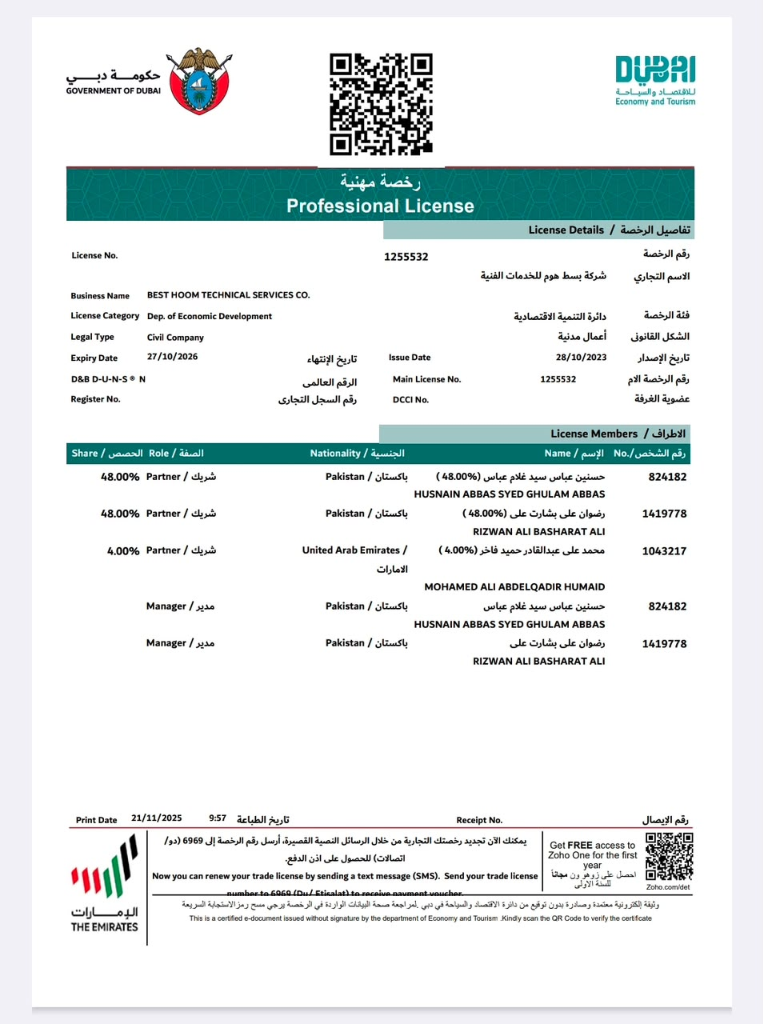
Official Technicalservicedubai (Technical Services Dubai — DET License #1255532) provides 24/7 emergency support and multi-trade maintenance across Dubai and all 7 states of the UAE.